How Can Product Quality Be Ensured in Sheet Metal Welding? Don’t Overlook These Details
In sheet metal fabrication, welding is a critical process used to join various metal components into a complete product structure. For items such as industrial equipment enclosures, metal frames, support structures, and custom sheet metal parts, the quality of the weld affects not only the structural integrity of the joints but also the overall dimensions, appearance, and subsequent assembly.
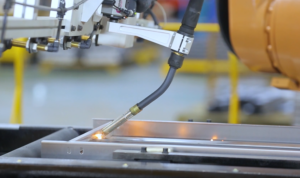
An improper choice of welding process can lead to issues such as thermal deformation, uneven weld beads, surface burns, and deviations in assembly dimensions.
So, which aspects of sheet metal welding require the most attention?
I. Selecting the Right Welding Process Based on Material Type
Different metals possess varying thermal conductivities, melting points, and welding characteristics. Therefore, the appropriate welding method must be selected based on the specific material grade, thickness, and product structure.
Common welding processes include:
TIG (Argon Arc) Welding: Suitable for various types of stainless steel and other metals that meet specific process requirements; often used for parts where high weld quality and a clean appearance are essential.
MIG Welding: Frequently used for aluminum alloys and other compatible materials.
MAG Welding: Commonly used for carbon steel and similar metallic materials.
Spot Welding: Suitable for lap joints in certain thin-sheet metal components.
The welding method should be determined by the specific requirements of the product, rather than relying solely on the material name.
II. Inspecting Component Structure Prior to Welding
Weld quality is closely linked to product design.
Before production begins, it is essential to verify the connection methods between parts, the placement of weld seams, sheet thickness, assembly gaps, and critical dimensions.
Excessive gaps between mating parts or poorly designed positioning structures can increase the difficulty of the welding process and negatively impact the final dimensions of the product.
For complex sheet metal assemblies, evaluating the welding sequence and assembly strategy in advance helps minimize potential production issues.
III. How Can Welding Deformation Be Minimized?
During welding, metal materials are subjected to localized high temperatures, causing thermal expansion followed by contraction during cooling. If the heat input is not distributed evenly, it can lead to the deformation of the components.
Common mitigation strategies include:
Carefully planning the welding sequence to prevent excessive localized heat concentration.
Selecting appropriate welding parameters tailored to the specific structure of the parts.
Utilizing suitable positioning fixtures to maintain the precise alignment of the components. Perform pre-welding and post-welding inspections of critical dimensions.
Carry out necessary post-welding corrections in accordance with product requirements.
For large sheet metal structural components, controlling welding-induced deformation is particularly important.
IV. What should be inspected after welding?
Once welding is complete, inspections must be conducted based on the customer’s drawings and product inspection standards.
Key focus areas include:
Whether the weld locations conform to the specifications in the drawings.
Whether there are any visible defects, such as cracks or porosity, in the welds.
Whether the overall dimensions of the product meet the requirements.
Whether any welding-induced deformation will affect subsequent assembly.
Whether the welded surfaces require grinding or other forms of finishing.
If the product requires powder coating, electroplating, or other surface treatments, the post-welding surface condition and specific treatment requirements must also be verified in advance.
V. Why is it necessary to evaluate drawings before sheet metal welding?
Many welding issues do not arise during production; rather, they are inherent to the product design phase.
Examples include weld locations that are difficult to access, unreasonable joint designs, or the potential for critical hole positions to shift after welding.
Therefore, evaluating materials, joint details, critical dimensions, and surface requirements prior to production helps identify potential issues early, thereby reducing unnecessary rework.
Sheet metal welding is a manufacturing process that requires a comprehensive assessment of materials, structural design, welding techniques, and quality inspection.
For custom welded parts, it is advisable to provide complete drawings during the inquiry stage, while clearly specifying weld requirements, dimensional tolerances, surface treatments, and the product’s intended operating environment.
Thorough communication during the early stages helps in establishing a more sound welding strategy, ensuring both product quality and compliance with subsequent assembly requirements.