How can dimensional accuracy and quality stability issues in precision metal stamping be addressed at the source?
In manufacturing metal components, dimensional accuracy and product consistency directly affect final-product assembly and performance. This is especially critical for metal stamped parts used in industrial equipment, automotive components, electronics, and mechanical structures; even a slight deviation in hole positioning, a variation in a bend angle, or a dimension falling outside of tolerance can complicate downstream assembly—or even compromise the proper operation of the entire piece of equipment.
For procurement professionals, the primary consideration when selecting a stamping supplier should not merely be the price, but rather the supplier’s ability to consistently produce parts that strictly adhere to the technical drawings.
I. The seeds of dimensional deviation are often sown before production begins.
Some stamped parts may meet dimensional requirements during the prototyping phase, yet encounter issues such as dimensional fluctuations, hole-position shifts, or inconsistent flatness once mass production commences.
These problems can stem from several factors:
Variations in material thickness or mechanical properties, which affect the outcome of the stamping process.
Flawed die design, leading to unstable positioning or forming.
Improper stamping clearances or cutting-edge design, which negatively impact dimensions and burr formation.
Inadequate control over material springback, resulting in deviations in bend angles and external dimensions.
Die wear during production, which compromises consistency over long-run manufacturing.
Therefore, precision stamping cannot rely solely on post-production inspection; risks must be managed proactively during the stages of drawing evaluation, die design, and process planning.
II. Enhancing manufacturability through comprehensive drawing evaluation.
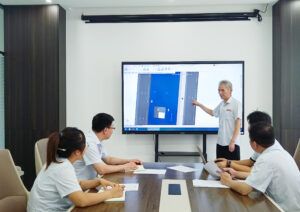
With 20 years of experience in custom metal component manufacturing, we begin by evaluating the production strategy for every client project. We analyze the product structure, material type, sheet thickness, and specific end-use requirements.
Our focus includes critical dimensions, tolerance specifications, hole-edge margins, bend radii, material grain/forming direction, and requirements regarding burrs. For parts with complex geometries or high precision requirements, we also assess the die structure, the sequence of stamping operations, and any potential risks of deformation during the forming process. This preliminary assessment helps clients identify potential issues early on, reducing the need for repeated mold modifications and minimizing quality risks during mass production.
III. Mold and Process Integration: Ensuring Stability in Mass Production
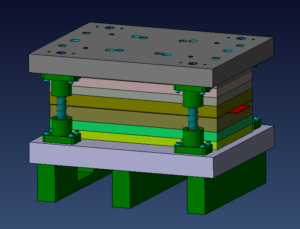
Precision metal stamping places high demands not only on equipment capabilities but also on mold design and process control.
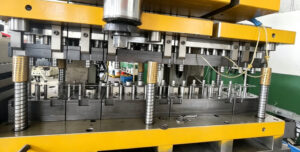
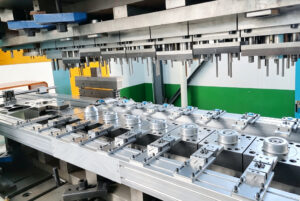
Depending on the product structure and order volume, various tooling solutions—such as single-stage, compound, or progressive dies—can be selected. A well-designed mold structure improves product positioning, boosts production efficiency, and eliminates unnecessary processing steps.
For parts featuring multiple holes, complex contours, or requirements for continuous forming, factors such as feeding methods, stamping clearances, forming sequences, and material springback must be carefully considered.
IV. From Sample Validation to Mass Production: Focusing on Every Critical Dimension

We prioritize quality consistency as a project transitions from the sampling phase to full-scale production. By verifying critical dimensions, hole locations, external contours, burr levels, and forming outcomes against client blueprints and specifications, we help mitigate quality risks during mass production.
Our services encompass metal stamping, deep drawing, sheet metal fabrication, bending, and subsequent surface treatments; we provide customized manufacturing solutions tailored to the specific structure of your parts.
If you are looking for a metal stamping partner capable of interpreting technical drawings, assessing manufacturing risks, and reliably fulfilling mass-production orders, please send us your product blueprints and technical requirements. We will analyze your product structure and manufacturing processes to develop the optimal production solution for you.