
How Does CNC Precision Machining Ensure Dimensional Accuracy? The Key Lies in Process Planning
In the manufacturing of mechanical equipment, automation systems, automotive components, and industrial parts, CNC precision machining is widely used to produce a variety of metal components. For OEM clients, CNC machining must not only achieve the external dimensions specified in the blueprints but also ensure that hole positions, flatness, geometric relationships, and critical mating dimensions meet the requirements for product assembly.
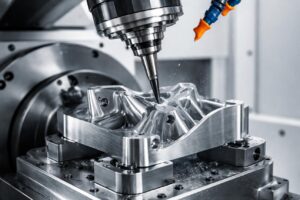
In actual production, individual dimensions of a part may meet specifications, yet issues such as misaligned holes, improper assembly clearances, or installation difficulties can arise when the part is integrated with other components. This demonstrates that precision machining cannot focus solely on isolated dimensions; rather, process planning must be approached with a comprehensive view of the overall structure and assembly requirements.
I. Why Do Dimensional Deviations Occur in CNC-Machined Parts?
CNC machining utilizes numerical control programs to govern the relative motion between the cutting tool and the workpiece, enabling operations such as milling, drilling, boring, and other cutting processes. Although the machining process offers high repeatability, the final results can still be influenced by various factors.
Common contributing factors include:
– Internal material stress and the release of stress during the cutting process.
– Inappropriate workpiece clamping methods, leading to positioning errors.
– Tool wear or unsuitable cutting parameters.
– Insufficient rigidity in thin-walled structures, making them prone to deformation during machining.
– Cumulative errors resulting from multiple clamping setups, which affect the consistency of machining datums.
– Temperature fluctuations that impact the dimensions of the equipment, cutting tools, and workpieces.
For parts featuring multiple holes, precision mating surfaces, and complex contours, these factors can all compromise the final assembly.
II. How Can the Dimensional Stability of CNC-Machined Parts Be Improved?
1. Define Critical Dimensions and Tolerance Requirements
Not all dimensions require the same level of precision. For mounting holes, locating surfaces, bearing seats, and connecting structures, critical dimensions and tolerances should be clearly defined based on their specific functional requirements—avoiding unnecessary high-precision machining that only serves to increase costs.
2. Strategically Plan Machining Datums
Machining datums directly influence how a part is positioned and determine the dimensional relationships between its features. For parts with specific positional requirements between multiple machined surfaces, datums should be arranged as logically as possible to minimize errors caused by repeated positioning.
3. Optimize Clamping Methods
Different part structures require appropriate clamping methods. For thin-walled components, irregularly shaped parts, and long components in particular, the impact of clamping force on product deformation must be considered.
4. Plan the Machining Sequence Effectively
For complex parts, the machining sequence—comprising roughing, semi-finishing, and finishing—should be organized based on specific features. When necessary, repositioning or stress-relief processes can be employed to improve dimensional stability.
5. Pay Attention to Cutting Tools and Parameters
Tool condition, cutting speed, feed rate, and depth of cut all influence the quality of machined surfaces and final dimensions; these must be adjusted based on the material and the product’s structure.
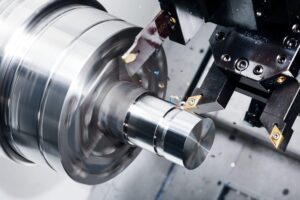
III. Why Is Drawing Evaluation Important Before CNC Machining?
A comprehensive technical drawing must not only specify the external dimensions of a part but also include the material grade, dimensional tolerances, geometric tolerances, surface roughness, and critical assembly requirements.
For parts with complex structures, particular attention should be paid to:
– The positional relationships between hole diameters and hole locations.
– Thread specifications and effective depths.
– Requirements for flatness, perpendicularity, and coaxiality.
– The structural rigidity of thin-walled sections.
– The impact of surface treatments on final dimensions.
If any technical requirements in the drawings are unclear, they should be clarified before production begins to prevent discovering—only after machining is complete—that the product fails to meet assembly requirements.
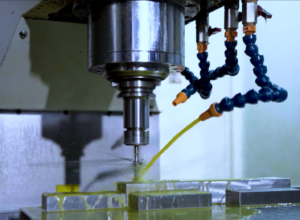
IV. CNC Custom Machining Services at Jiantong Hardware
Jiantong Hardware Manufacturing Co., Ltd. possesses 20 years of experience in custom hardware machining, specializing in the bespoke manufacturing of industrial metal components.
Upon receiving client drawings, we conduct a thorough evaluation of materials, critical dimensions, tolerances, structural features, and assembly requirements, subsequently planning the optimal machining process tailored to the specific characteristics of the product.
In addition to CNC machining, we offer a comprehensive range of complementary processes—including precision stamping, deep drawing, sheet metal fabrication, bending, laser cutting, welding, and surface finishing—to provide full-spectrum support for our clients.
V. Obtaining a CNC Machining Solution Tailored to Your Product
If you require the machining of mechanical components, equipment connectors, mounting bases, or other custom metal parts, please provide us with your 2D or 3D drawings, material specifications, and critical dimensions.
We can assess the feasibility of machining and develop an optimal process plan based on your product’s structure and assembly requirements.
At Jiantong Hardware, we go beyond simply completing the machining of a part; we ensure that every critical dimension meets the requirements of its actual application. Please send us your drawings to receive a customized CNC machining solution.