
How to Choose Materials for CNC Machining? Differences in Applications for Aluminum Alloys, Stainless Steel, and Carbon Steel
In CNC machining projects, the choice of material directly influences a part’s mechanical properties, machining complexity, service life, and final manufacturing cost.
Different industrial components have distinct operating environments and functional requirements. For instance, lightweight structural components in automation equipment are often best suited for aluminum alloys; parts requiring corrosion resistance may call for stainless steel; and for mechanical structural components that must bear significant loads while remaining cost-sensitive, various grades of carbon steel may be the ideal choice.
For OEM purchasers and mechanical engineers, selecting materials for CNC machining should not be based on price alone. Instead, it requires a comprehensive evaluation that considers product functionality, the operating environment, machining requirements, and any subsequent surface treatments.
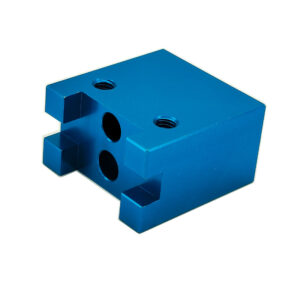
I. CNC Machining with Aluminum Alloys: Ideal for Lightweight and Complex Structural Parts
Aluminum alloys are a common choice in CNC machining due to their low density, excellent machinability, and high thermal conductivity.
Typical applications include:
Mounting brackets for automation equipment
Enclosures for electronic devices
Heat sinks and thermal management components
Mechanical connecting blocks
Equipment bases
Lightweight structural parts
Common aluminum alloy grades include 6061 and 7075.
6061 aluminum alloy offers a good balance of properties, making it suitable for a wide range of mechanical structural components. 7075 aluminum alloy provides higher strength, making it appropriate for parts that require both high strength and low weight.
When selecting materials, it is also important to consider the material temper (condition), actual load-bearing requirements, and any post-processing needs, such as anodizing.
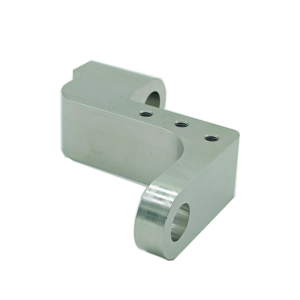
II. CNC Machining with Stainless Steel: Ideal for Parts Requiring Corrosion Resistance
Stainless steel offers excellent corrosion resistance and robust mechanical properties. Common grades include 304 and 316.
304 stainless steel is widely used in industrial equipment, mechanical fasteners, and general components that require corrosion resistance.
316 stainless steel provides superior resistance to chloride-induced corrosion, making it suitable for products exposed to specific, more demanding corrosive environments.
When CNC machining stainless steel, factors such as work hardening, cutting heat, and tool wear must be carefully managed. Selecting the appropriate cutting tools, optimizing cutting parameters, and employing effective cooling methods can significantly improve the machining process.
III. CNC Machining of Carbon Steel: Suitable for Mechanical Structures and Load-Bearing Components
Carbon steel has a wide range of applications, with various grades available to meet specific product performance requirements.
Common materials include Q235 and 45 steel.
Q235 is frequently used for general mechanical structures and support components, while 45 steel is typically employed for shafts, connectors, and other mechanical parts that require specific strength and mechanical properties.
For carbon steel parts requiring rust protection, surface treatments—such as black oxide coating, galvanizing, or spray painting—should be considered based on the intended operating environment.

IV. Potential Manufacturing Issues Arising from Incorrect Material Selection
In actual CNC machining projects, selecting a material that does not align with the product’s operational requirements can lead to the following issues:
Insufficient material strength, failing to meet actual load-bearing requirements.
Poor machinability, resulting in increased tool wear and greater manufacturing difficulty.
Inadequate corrosion resistance, limiting the product’s suitability for its intended environment.
Incompatibility between the surface treatment and the material, compromising the final appearance and protective performance.
Over-specification (selecting a higher-performance material than necessary), leading to unnecessary procurement and processing costs.
Therefore, it is essential to define the material grade, condition, performance characteristics, and surface requirements during the product development phase.
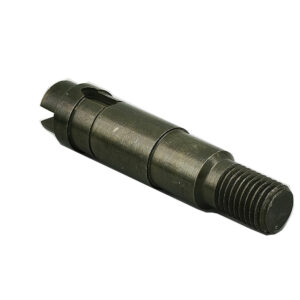
V. How Jiantong Hardware Assists Clients in Evaluating Materials for CNC Machining
Jiantong Hardware Manufacturing Co., Ltd. specializes in custom hardware machining and possesses 20 years of industry experience.
For every CNC machining project, we conduct a comprehensive evaluation covering material grades, part geometry, critical dimensions, tolerances, surface roughness, and post-processing requirements.
For parts involving multiple manufacturing processes, we can develop integrated production solutions that incorporate stamping, sheet metal fabrication, bending, and surface finishing.
Our goal goes beyond simply recommending a material; we work to identify the most suitable materials and manufacturing methods tailored to the specific, real-world needs of your product.
VI. Submit Your Drawings for a CNC Material and Process Evaluation
If you are developing CNC-machined parts made from aluminum alloy, stainless steel, or carbon steel, please provide your product drawings, material specifications, intended operating environment, and projected order quantities.
We will evaluate material suitability and manufacturing strategies based on your product’s design and technical requirements. From material selection to component machining, Jiantong Hardware pays close attention to every detail that impacts product performance and manufacturing costs. Please feel free to contact us for customized CNC machining support.