How to Choose Surface Treatments for Metal Parts?
I. Why Should You Look Beyond Appearance When It Comes to Metal Parts?
For industrial equipment, mechanical structural components, and custom hardware, surface treatment is about more than just aesthetics. It directly influences a part’s corrosion resistance, wear resistance, electrical conductivity, and suitability for assembly.
Different operating environments impose different requirements on metal parts. For instance, outdoor equipment may prioritize rust prevention and weather resistance; electrical connectors may need to ensure reliable conductive contact; mechanical enclosures often require consistent appearance and surface protection; and parts designed for sliding fits require careful consideration of how coating thickness might affect their dimensions.
If a surface treatment strategy is not established during the design phase—and is instead left until after the parts have been manufactured—it can lead to issues such as coatings interfering with assembly, threads failing to engage properly, or electrical contact points failing to meet conductivity requirements.
Therefore, surface treatment should be integrated into the overall product manufacturing plan, rather than being treated merely as a final, cosmetic finishing step.
II. What Are Some Common Metal Surface Treatment Processes?
1. Galvanizing: Corrosion Protection for Steel Parts
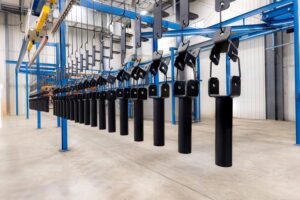
Galvanizing involves applying a zinc layer to the surface of steel. This layer acts as both a physical barrier and a “sacrificial anode,” protecting the underlying substrate from corrosion.
Common applications include brackets, fasteners, structural components, and various sheet metal parts. The specific method—such as electro-galvanizing or other galvanizing techniques—should be selected based on the part’s geometry, its operating environment, and the required level of corrosion resistance.
If a part features threaded holes, mating surfaces, or areas requiring electrical connectivity, it is essential to determine in advance whether these zones need to be masked off or require additional post-processing.
2. Powder Coating: Balancing Aesthetics and Protection
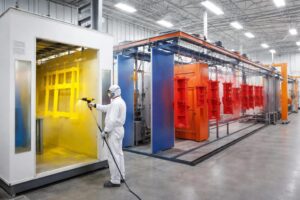
Powder coating is a process in which dry powder paint is applied to a workpiece—typically via an electrostatic charge—and then cured to form a durable coating.
This process is frequently used for equipment enclosures, sheet metal cabinets, metal brackets, and protective mechanical guards. Clients can choose from a wide range of colors, textures, and gloss levels to achieve the desired appearance.
It is important to note that the quality of surface cleaning and pre-treatment prior to powder application will significantly impact how well the coating adheres to the part. For features such as threads, grounding points, conductive contact surfaces, and precision-fit areas, masking should be considered based on their specific functional requirements.
3. Anodizing: Primarily for aluminum and its alloys
Anodizing is an electrochemical process that forms an oxide film on the surface of aluminum and its alloys, enhancing corrosion resistance, wear resistance, and aesthetic appeal.
Common applications include aluminum alloy enclosures, equipment panels, structural brackets, and precision aluminum components. The specific anodizing process and film requirements will influence the final color, surface finish, and dimensions.
It is important to note that anodizing is not a universal treatment suitable for all metallic materials. When designing, specify the aluminum alloy grade, anodizing requirements, desired color, and whether any conductive contact areas are present.
4. Passivation: Enhancing corrosion resistance on specific metal surfaces
Passivation is commonly applied to materials such as stainless steel. Through targeted chemical treatment, the surface passive film is optimized, thereby improving corrosion resistance.
For custom stainless steel parts, if the component has undergone welding, machining, or other processes that could alter its surface state, the need for passivation should be evaluated based on the material and application requirements.
Passivation cannot compensate for all material or manufacturing defects; proper pre-treatment and surface cleaning are equally critical.
5. Nickel Plating: Balancing surface protection with functional requirements
Nickel plating is used for metal components that require surface protection, aesthetic enhancement, or specific functional properties. It is commonly found on mechanical parts, hardware, and certain electrical components.
As different nickel-plating processes offer varying characteristics, the specific approach should be determined based on the substrate material, operating environment, coating specifications, and functional contact requirements.
III. What factors should a purchaser consider when selecting a surface treatment process?
First, define the operating environment of the part.
Will the part be used in indoor equipment, or will it be exposed to humidity, salt spray, or outdoor conditions over the long term? Different environments impose different requirements for corrosion resistance. One cannot judge the level of protection solely by the surface color.
Second, consider the functional areas of the part.
For components that require grounding, conductive connections, threaded interfaces, or precision assembly, coatings may alter surface dimensions or affect contact performance. During the design phase, it is essential to clearly define which areas require surface treatment and which areas should retain the original substrate surface.
Furthermore, ensure that the chosen materials and processes are compatible.
Surface treatment methods vary depending on whether the material is steel, aluminum alloy, stainless steel, or copper alloy. The selection of a process should be based on the material composition, the condition of the surface, and the intended operating environment.
Finally, establish clear requirements for appearance and acceptance criteria.
Specifications regarding color, gloss, texture, coating coverage, film requirements, and inspection standards should be confirmed prior to production. For bulk orders, it is also advisable to establish physical appearance samples or mutually agreed-upon acceptance criteria to minimize discrepancies in interpretation between different production batches.
IV. How should surface treatment be integrated with preceding manufacturing processes?
The effectiveness of a surface treatment is closely linked to the quality of the preceding manufacturing steps.
For instance, if parts are to be powder-coated, masking requirements for threaded holes, grounding points, and mating surfaces should be planned in advance. If the parts are to be anodized, the surface condition and potential dimensional changes must be considered during the machining phase for aluminum alloy components.
Incorporating surface treatment requirements into the overall manufacturing plan early on helps reduce the need for rework and ensures that the final parts better meet the requirements for assembly and actual use.
V. Jiantong Hardware: Custom Metal Part Manufacturing and Processing Support
With 20 years of experience in custom metal manufacturing, Jiantong Hardware Manufacturing Co., Ltd. specializes in precision metal stamping, deep drawing, sheet metal fabrication, bending, CNC machining, laser cutting, welding, and surface treatment.
For metal parts with diverse structures and applications, we work with clients to develop tailored manufacturing and surface treatment solutions based on their technical drawings, base materials, operating environments, and assembly requirements. For products requiring multi-stage processing, we carefully evaluate the relationship between preliminary manufacturing steps and the final surface finish.
If you are developing new metal parts or looking to optimize the surface treatment for existing products, please send us your technical drawings, material specifications, and details regarding the intended operating environment. Jiantong Hardware can assist in evaluating process suitability, helping you avoid costly downstream adjustments caused by improper surface treatment choices.